

The protagonist of any story is the most easily scrutinized. The protagonist’s actions and choices drive the story and we as readers and watchers perceive these actions and choices with a critical eye. For this reason, among others, the protagonist of a story is often the most harshly judged. We spend the most time with the protagonist, and the protagonist usually has the most impact on the story, and therefore we as the audience have more to consider about the protagonist than any other character. One of the most strongly criticized protagonists in literature and in film is Frodo Baggins, the hobbit who takes on the quest to destroy The One Ring in J.R.R. Tolkien’s epic, The Lord of the Rings.
Discussion of Frodo often includes jabs such as “useless” and “weak” and “Sam did all the work” (we’ll come back to Sam). Though there are plenty of fans that acknowledge Frodo’s positive attributes, and there are those who fiercely love and defend his character, ripping into Frodo has been a pretty popular thing to do since the books were first published. Tolkien himself made a reference to detractors of Frodo in one of his letters.
“A […] commentator on the point some months ago reviled Frodo as a scoundrel […]. It seems sad and strange that, in this evil time when daily people of good will are tortured, ‘brainwashed,’ and broken, anyone could be so fiercely simpleminded and self-righteous.”
From this quote we can discern that distaste for Frodo did not begin with the movies in the early 2000s, and that Tolkien was defensive of the character.
Tolkien made it easier for audiences to judge Frodo harshly when he paired him up with Samwise Gamgee (Sam) for the majority of the story. Sam is the indisputable fan favorite. Characters such as Aragorn and Eowyn are also beloved by the fan base, but Sam, it seems, still reigns as the most loved character. Story-wise, it makes complete sense for Frodo and Sam to stay together over the course of the story. They are best friends, and Frodo needed a companion on his perilous journey. It’s also just unrealistic to imagine Sam ever letting Frodo go off by himself, or Frodo being able to deny him. But when Frodo was paired with Sam, that made it all the easier for audiences to disparage Frodo and put Sam on a pedestal.
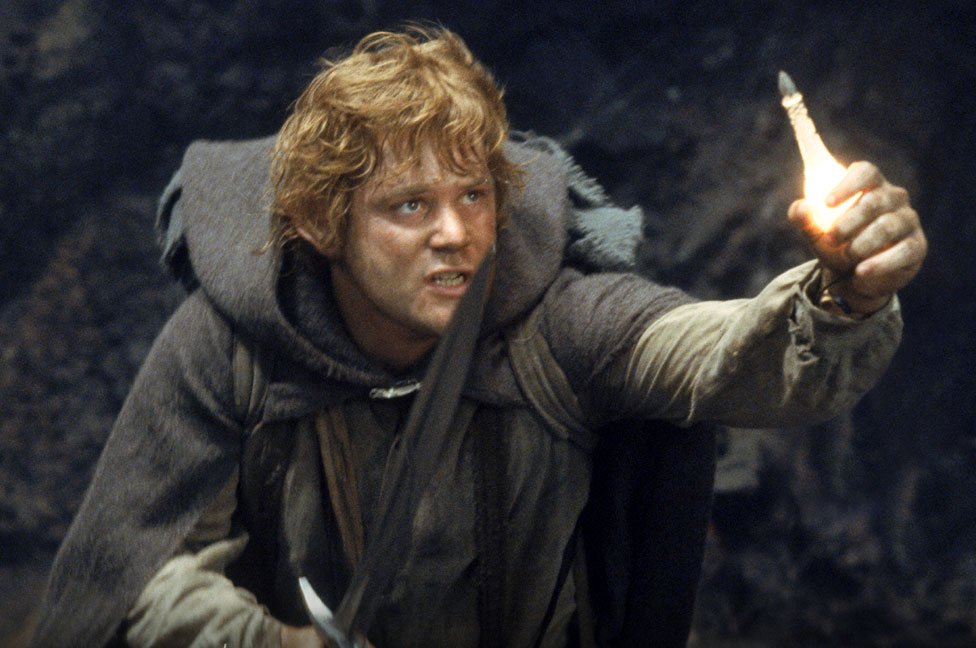
Sam gets perhaps the most outwardly heroic scenes in the story. Sam slays Shelob, a legendary, giant and evil spider, to save Frodo. Sam takes the Ring when he thinks Frodo is dead to complete the mission. Sam saves Frodo when he is taken by the Orcs into Mordor. Sam carries Frodo up Mount Doom when Frodo can go no further. These are some of the most powerful, heroic moments in the story, and they secure Sam’s fan favorite throne. Sam is undoubtedly Frodo’s rock, his strength. Without Sam, Frodo would not have made it to Mordor. It is a simple truth that Frodo does not have as many grand, heroic scenes as Sam. As a result, Sam comes across as the “strong one” the “brave one” and ultimately, the “better one” between the two.
So how did Tolkien view Sam? Well, a commonly circulated quote, used as proof of Sam’s superiority to Frodo, is when Tolkien referred to Sam as the “chief hero” of the story. Here is that quote:
“I think the simple ‘rustic’ love of Sam and his Rosie […] is absolutely essential to the study of his (the chief hero’s) character, and to the theme of the relation of ordinary life (breathing, eating, working, begetting) and quests, sacrifice, causes, and the ‘longing for Elves’, and sheer beauty.”
Here Tolkien is discussing an essential part of Sam’s character, that he is ordinary in many ways (he’s a gardener) but that does not negate his sacrifices and bravery. To Tolkien, the ordinary are heroes. Sam exemplifies that in many ways. So Sam is “the chief hero” and that must be it then. Sam is better than Frodo and we can all pack it up and go home, right? Well, no. I think it’s important to look at who Tolkien was inspired by when he wrote Sam.
“My Sam Gamgee is indeed a reflexion of the English soldier, of the privates and batmen I knew in the 1914 war, and recognized as so far superior to myself“
This is another quote that we see often when discussing Sam, but what I believe is the most important part of this quote is consistently left out. “So far superior to myself.” There it is. Tolkien modeled Sam off of his comrades in World War I. His comrades, who he saw as superior to him. It is no wonder that Sam comes across on the page and on the screen as being the greatest friend and person. Tolkien wrote Sam specifically to be the best of us.
Where does that leave Frodo? Frodo’s moments of heroism aren’t nearly as flashy as Sam’s. His determination to resist the Ring isn’t as showstopping as Sam’s defeating Shelob. His decision to spare Gollum’s life doesn’t make your heart soar the way it does when Sam throws Frodo on his back. But that does not make Frodo’s actions any less heroic because they’re unlikely to make an audience applaud in the theater. When Faramir asked Frodo if he should kill Gollum, and Frodo said no (as well as many other times Frodo spared Gollum) this turned out to be arguably the most important action he took to destroy the Ring, as discussed by Tolkien:
“His exercise of patience and mercy towards Gollum gained him Mercy: his failure was redressed.”
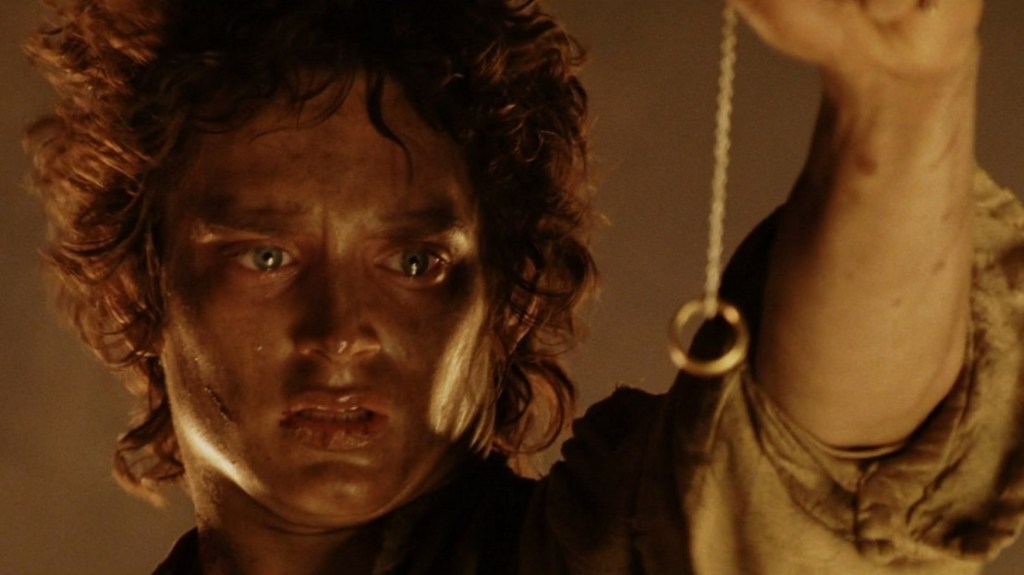
Had Frodo not had compassion for Gollum, something even Sam lacked, and spared his life, Gollum would not have been there at Mount Doom to fight with Frodo over the Ring and ultimately fall into the lava with it. Gollum had to survive for the Ring to be destroyed. It was Frodo’s compassion that allowed for this.
Frodo’s struggle against the Ring is harder to get a handle on, because it’s entirely internal. We aren’t privy to exactly what the Ring offers Frodo in his many months carrying it, but we do know that Frodo becomes more and more consumed by it as the story goes on. It affects his behavior and we, the audience, know that the longer he has it, the harder it will be for him to destroy it. Despite this, Frodo never wavers from the quest, all the way up until the moment he’s holding the Ring over the lava. Before that moment, he never turns back or changes his mind about destroying the Ring. He pushes forward, all the while the Ring is whispering in his ear, undoubtedly trying to make him change his mind. His resistance to this is commendable as we see many characters fall victim to it. Even Sam is momentarily tempted to take it.
Frodo’s resistance to the Ring and consistent determination to destroy it is commendable. But of course, as every reader of the books or viewer of the movies know, this does not last forever. Frodo, at the last possible moment as he holds the Ring over the lava, succumbs to its power. He takes the Ring for his own. The Ring is only destroyed after Gollum fights him, takes it from him, and falls into the lava with it. Frodo failed in his quest. Or did he? Tolkien had his input.
“I do not think that Frodo’s failure was a moral failure. At the last moment the pressure of the Ring would reach its maximum- impossible, I should have said, for any one to resist, certainly after long possession, months of increasing torment, and when starved and exhausted. Frodo had done what he could and spent himself completely and had produced a situation in which the object of his quest could be achieved.”
According to Tolkien, for Frodo to destroy the Ring in this moment would have been impossible. As he had completely spent his body and mind and the Ring was putting the most possible pressure on him in Mount Doom. The implication here is that no one could have destroyed the Ring, at least not under these circumstances. However, because Frodo got the Ring as far as he did, and he previously spared Gollum’s life, Frodo created a situation in which the Ring could be destroyed, it just wasn’t in the way one would have expected: Frodo simply tossing the Ring into the lava. That was not, according to Tolkien, a possible outcome.
“We are finite creatures with absolute limitations upon the powers of our soul-body structure in either action or endurance. Moral failure can only be asserted, I think, when a man’s effort or endurance falls short of his limits.”
Here we come to what Tolkien believes it means to do good, and what he believes is a “moral failure.” The way Tolkien wrote the end of The Lord of the Rings, we can see that he does not believe doing good necessarily means overcoming evil in its entirety. He also doesn’t believe that if you succumb to evil, or do something immoral, that that is always a moral failure. Rather, he believes that the struggle against evil, pushed to a person’s limits, is moral. That is what Frodo does in the story. He struggled against the Ring and pushed himself physically and mentally, as far as he possibly could all the way to Mount Doom, and he was faced with the near impossible choice at that point. But his failure to destroy the Ring does not make Frodo bad. It was his struggle to get there that makes him good. Also, according to Tolkien, Frodo’s original intentions are important.
“Frodo undertook his quest out of love-to save the world he knew from disaster at his own expense, if he could; and also in complete humility, acknowledging that he was wholly inadequate to the task. His only real contract was only to do what he could, to try to find a way, and to go as far on the road as his strength of mind and body allowed. He did that.”
This, I think, may be the most important thing Tolkien ever said in his discussion of Frodo. It reflects Frodo’s journey as well as Tolkien’s moral philosophy. Frodo’s task was not to throw the Ring in the lava and destroy the greatest object of evil, his task was to “do what he could, to try to find away.” That, I believe, is Tolkien’s view of morality. Not overcoming evil every time, but to try. To try to resist evil. To try to be better, even if it’s hard. Frodo did that, in every way possible.
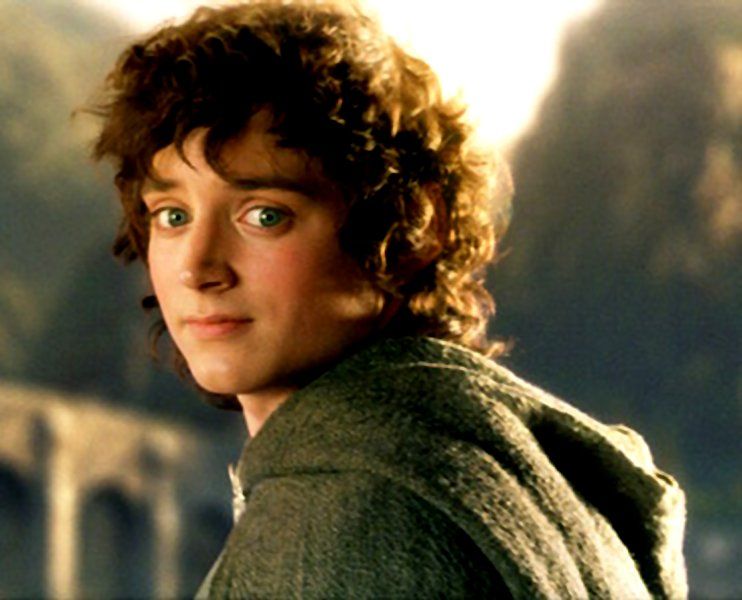
Frodo was written, in large part, to reflect Tolkien’s own moral philosophy. Frodo’s journey is what Tolkien believes it means to do good. When looked at from this perspective, it is not surprising that Frodo is consistently put down and is far less popular than Sam. Frodo in many ways reflects our own flaws. Sam is everything Tolkien admired; the friend we should strive to be. Frodo’s character presents a challenge to us as an audience. To try to find a way to resist evil, even if it’s painful.
 Liztalks.com